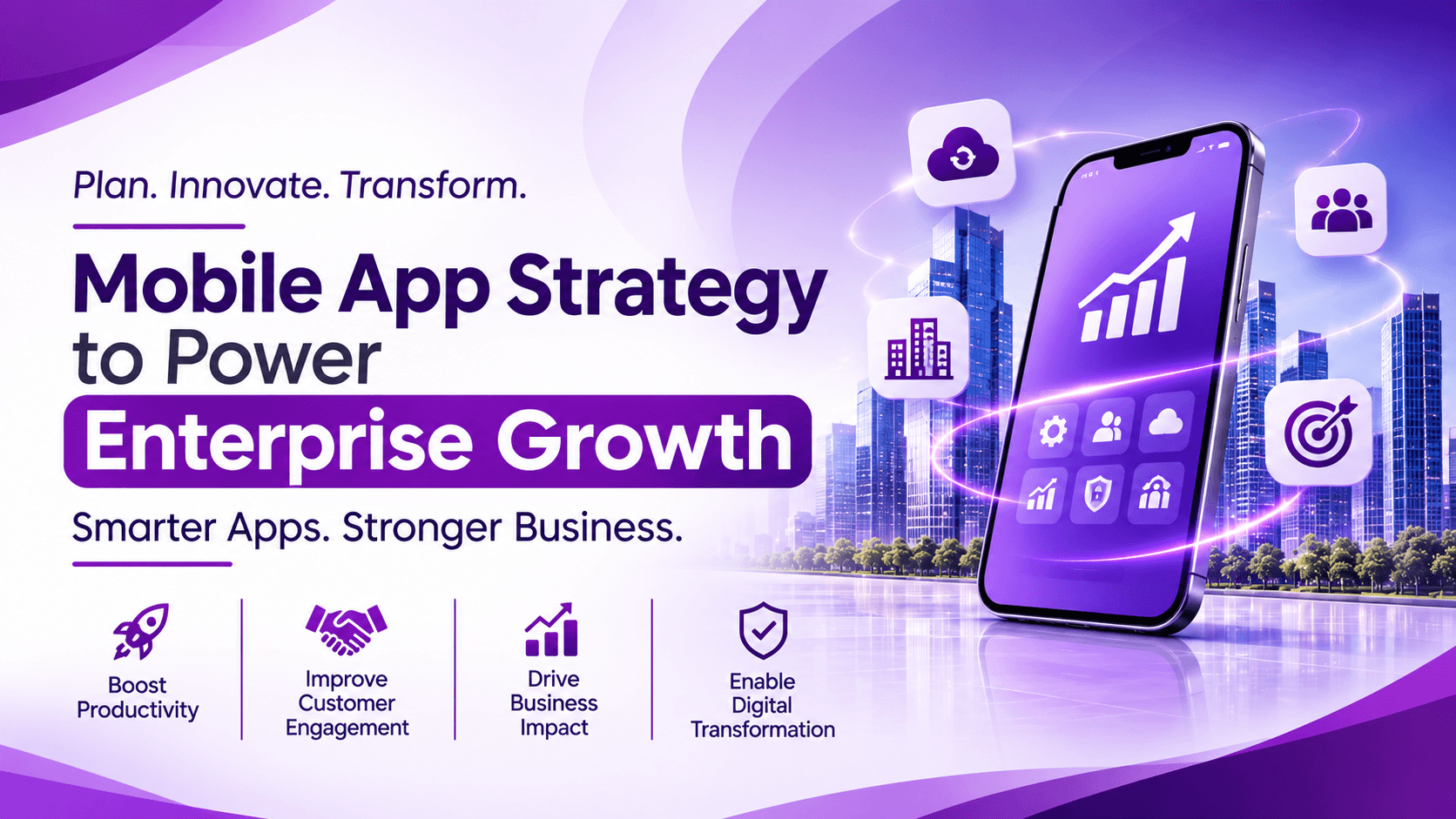
Digital transformation has become a defining priority for enterprise organizations. Companies across industries are investing in technology to modernize operations, improve customer experiences, and build more efficient business processes.
Among the most powerful enablers of digital transformation are enterprise mobile applications. Mobile platforms connect employees, customers, and systems in real time. They enable organizations to digitize workflows, access data instantly, and operate with greater agility.
However, simply building a mobile app does not create transformation. True impact comes from a well-defined mobile app strategy that aligns technology with business objectives. Without a structured strategy, enterprise mobile initiatives often result in disconnected applications, poor adoption rates, and limited long-term value.
This article explores how enterprises can design an effective mobile app strategy for digital transformation and ensure that mobile platforms support sustainable growth.
The Problem: Why Many Enterprise Mobile Initiatives Fail
Enterprise organizations frequently launch mobile projects with enthusiasm, yet many initiatives fail to deliver expected outcomes. The problem usually lies in the absence of strategic planning.
1. Fragmented Mobile Solutions
Many companies develop multiple mobile apps across departments without a unified strategy. This leads to:
- Disconnected systems
- Duplicated features
- Inconsistent user experiences
- complexity.
2. Poor Integration with Enterprise Systems
Mobile apps must integrate with enterprise infrastructure such as:
- ERP systems
- CRM platforms
- Internal databases
- Analytics tools
Without proper integration, apps become isolated tools rather than transformation enablers.
3. Lack of Clear Business Objectives
Some organizations launch mobile apps simply to “stay competitive” but digital transformation requires defined goals such as:
- Improving operational productivity
- Enhancing customer experience
- Automating business workflows
- Increasing data accessibility
Without clear objectives, measuring success becomes difficult.
4. Limited Scalability
Enterprise mobile platforms must support long-term growth. If architecture and infrastructure are not designed for scale, apps may struggle with:
- Performance issues
- Increased user demand
- Expanding business requirements
Scalability must be built into the strategy from the beginning.
The Solution: A Strategic Enterprise Mobile Framework
The solution is to treat mobile applications not as isolated products but as part of a larger digital transformation ecosystem. An effective enterprise mobile strategy focuses on:
- Integration with enterprise systems
- Alignment with business objectives
- Scalable architecture
- Seamless user experience
Organizations that approach mobile development strategically can unlock significant operational and competitive advantages.
Enterprise Mobile App Strategy Framework
Below is a practical framework enterprises can use to design their mobile transformation strategy.
1. Define Transformation Goals
The first step is identifying what the organization aims to achieve through mobile platforms. Common enterprise goals include:
- Improving workforce productivity
- Enhancing customer engagement
- Digitizing operational processes
- Enabling real-time data access
Clearly defined objectives guide technology decisions and development priorities.
2. Identify High-Impact Use Cases
Not every process needs a mobile application. Organizations should identify areas where mobile access creates the greatest value.
Examples include:
- Field operations management
- Mobile CRM access for sales teams
- Real-time analytics dashboards
- Service and maintenance management
Focusing on high-impact use cases ensures faster ROI.
3. Design Scalable Architecture
Enterprise mobile apps must support large user bases and growing workloads. A scalable architecture typically includes:
- Cloud-based infrastructure
- Microservices architecture
- Secure APIs for system integration
- Centralized data management
A strong architectural foundation ensures long-term sustainability.
4. Integrate with Enterprise Ecosystems
Mobile platforms should connect seamlessly with existing enterprise tools. Key integration areas include:
- CRM systems
- ERP platforms
- Enterprise data warehouses
- Customer support systems
Integration ensures mobile applications enhance existing operations rather than replacing them.
5. Focus on Enterprise UX
Enterprise users prioritize efficiency over aesthetics. Mobile apps should support:
- Quick navigation
- Streamlined workflows
- Minimal learning curves
- Task-focused interfaces
A well-designed enterprise user experience increases adoption across teams.
6. Implement Security and Compliance Measures
Security is critical in enterprise mobile ecosystems organizations must implement:
- Encrypted data transmission
- Secure authentication systems
- Role-based access controls
- Regulatory compliance frameworks
Security should be embedded throughout the development lifecycle.
7. Establish Continuous Improvement Processes
Digital transformation is an ongoing process organizations should monitor:
- App performance metrics
- User adoption rates
- Workflow improvements
- Operational efficiency gains
Continuous improvements ensure the mobile platform evolves alongside business needs.
Benefits of a Strong Enterprise Mobile Strategy
When implemented effectively, a mobile app strategy offers several long-term benefits.
Improved Operational Efficiency
Employees gain access to systems and data from anywhere, improving productivity and responsiveness.
Enhanced Customer Experiences
Mobile platforms allow companies to deliver personalized and responsive services to customers.
Faster Decision-Making
Mobile dashboards and analytics tools provide real-time insights for leadership teams.
Streamlined Workflows
Mobile automation reduces manual processes and improves operational speed.
Greater Business Agility
Organizations can respond more quickly to market changes and operational challenges.
Enterprise Use Cases for Mobile Transformation
Enterprise mobile strategies are applied across many areas of business operations.
Field Service Management
Technicians use mobile apps to:
- Access service records
- Update job status
- Communicate with central teams
This improves service efficiency and response times.
Enterprise Sales Enablement
Sales teams use mobile CRM applications to:
- Track leads
- Access customer insights
- Manage sales pipelines
Mobile access improves responsiveness and deal conversion rates.
Workforce Collaboration
Enterprise mobile apps support collaboration tools, enabling teams to communicate and manage projects more effectively.
Executive Decision Dashboards
Mobile analytics platforms allow executives to monitor:
- Financial performance
- Operational metrics
- Strategic KPIs
This ensures leadership teams stay informed in real time.
Why Mobile Is Central to Enterprise Digital Transformation
Digital transformation is fundamentally about making organizations more connected, responsive, and data-driven.
Mobile technology supports these goals by enabling:
- Real-time communication
- Instant data access
- Connected digital ecosystems
When integrated properly, mobile platforms act as the interface between enterprise systems and the people who rely on them daily.
Final Thoughts
Enterprise digital transformation requires more than adopting new technologies. It requires strategic alignment between technology, business processes, and user needs. Mobile applications play a crucial role in this transformation by connecting employees, customers, and systems in a flexible and scalable environment. Organizations that build a clear enterprise mobile app strategy can unlock greater operational efficiency, improve customer experiences, and create stronger digital infrastructures for future growth.